Energy Monitoring Systems For Lighting - How To Track & Cut Power Usage India (2026)
📍 Noida
🕐 1 day ago
👁 105 views
INR 0
Description
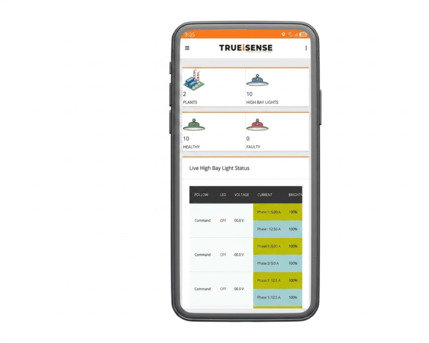
Quick Answer: A lighting energy monitoring system is a platform that collects, aggregates, and presents data on lighting electricity consumption — at device, zone, or facility level — enabling operators to identify inefficiencies, measure the impact of efficiency interventions, and verify savings. TRUEiSENSE's IoT-integrated sensor based energy management platform provides device-level monitoring for every connected luminaire node — transmitting real-time power consumption data to a central dashboard via LoRaWAN, WiFi, or GSM. The CCMS dashboard provides the same monitoring for smart street lighting networks. Combined with true presence sensing for occupancy data. Energy Monitoring Granularity - Which Level Is Most Useful? 1. Aggregate (Billing) (i) Data Granularity: Total facility consumption only (ii) Actionability: Low — cannot identify specific sources of energy waste (iii) TRUEiSENSE Capability: Baseline information available from electricity bills 2. Sub-Meter / Panel (i) Data Granularity: Floor-level or zone-level consumption (ii) Actionability: Moderate — helps identify high-consumption floors or zones (iii) TRUEiSENSE Capability: Available through panel-level metering 3. Device Level (IoT) (i) Data Granularity: Individual luminaire consumption in real time (ii) Actionability: High — identifies specific wastage points immediately (iii) TRUEiSENSE Capability: Supported through the TRUEiSENSE IoT Dashboard and CCMS platform Sensor Lighting: trueisense.in/collections/presence-sensor-lightings Free Assessment: trueisense.in/pages/free-energy-savings-assessment As of 2026, energy monitoring is the foundation of effective energy management for Indian commercial and industrial facilities. Without accurate, granular data on how and where electricity is being consumed, energy managers cannot identify waste, prioritize interventions, or verify the impact of efficiency improvements. TRUEiSENSE's IoT-integrated sensor lighting and CCMS smart street lighting systems incorporate device-level energy monitoring as standard — providing the most actionable data available from any smart sensor based energy management platform in India. Why Does Device-Level Energy Monitoring Matter? In a typical large commercial facility, the energy manager knows the total monthly electricity bill — but without monitoring infrastructure, cannot identify which zones or devices are responsible for high consumption. Device-level monitoring changes this: when every luminaire reports its consumption in real time, anomalies become immediately visible on the dashboard. If a facility has 200 sensor lighting nodes and aggregate monitoring shows higher-than-expected consumption, there is no way to identify the responsible node without visiting each one physically. With device-level monitoring, the anomalous node is immediately visible — enabling a targeted, efficient maintenance response. Post-deployment, device-level data provides precise before-and-after consumption comparison that validates savings and supports ROI calculations. Bottom Line: Device-level energy monitoring is the most actionable granularity available — enabling precise fault identification, savings verification, and ESG data generation that aggregate or panel-level monitoring cannot provide. How Does TRUEiSENSE's IoT Platform Monitor Lighting Energy? Each luminaire node in TRUEiSENSE's smart lighting network contains an IoT communication module that transmits a data packet at regular intervals — including current power consumption, operational status, dimming level, and any fault conditions — to the central CCMS server or IoT dashboard via LoRaWAN, WiFi, or GSM. 1. Current Wattage (Real Time) (i) What It Enables: Instant visibility of power consumption per node (ii) Business Value: Detects anomalies compared to rated performance 2. Operational Status (On / Dim / Off) (i) What It Enables: Verification of activation patterns (ii) Business Value: Confirms that sensor automation is functioning correctly 3. Dimming Level (i) What It Enables: Visibility of the current brightness setting (ii) Business Value: Verifies that schedules and remote commands are executing as intended 4. Fault Condition Flags (i) What It Enables: Immediate fault identification (ii) Business Value: Supports proactive maintenance before public complaints occur 5. Historical Trend Data (i) What It Enables: Analysis of consumption patterns over time (ii) Business Value: Enables shift-level and zone-level optimization Bottom Line: TRUEiSENSE's IoT platform converts every luminaire node into a real-time energy measurement point — providing the continuous, granular consumption data that transforms lighting from a fixed cost into a manageable, optimizable energy system. How to Use Energy Data to Cut Power Usage Energy monitoring data from TRUEiSENSE's IoT platform enables four specific interventions to reduce lighting power usage — all achievable remotely via the dashboard without physical site visits. 1. Time-Delay Optimization (i) Energy Data Signal: Lights remain on long after the last occupancy event (ii) Dashboard Action: Reduce the time-delay setting for the affected zone (iii) Result: Reduced runtime in vacant areas 2. Dimming Level Adjustment (i) Energy Data Signal: Zone consumption exceeds actual task requirements (ii) Dashboard Action: Lower the dimming level for that zone (iii) Result: Direct reduction in energy consumption 3. Zone Reconfiguration (i) Energy Data Signal: High consumption despite low expected occupancy (ii) Dashboard Action: Adjust sensor coverage areas or redefine zone boundaries (iii) Result: Sensor activation aligns more closely with actual work areas 4. Sensor Sensitivity Tuning (i) Energy Data Signal: Frequent short on/off switching cycles (ii) Dashboard Action: Increase time delay or adjust sensor sensitivity settings (iii) Result: Reduced unnecessary switching and improved operational stability Bottom Line: TRUEiSENSE's four energy optimization interventions — time-delay, dimming, zone, and sensitivity tuning — are all remotely actionable via the IoT dashboard, turning energy monitoring data into immediate power reduction without site visits. Energy Monitoring for Indoor Offices and Commercial Spaces In an office or commercial building, zone-level energy monitoring provides valuable insights into how consumption correlates with occupancy. When a zone shows high lighting energy during periods when presence sensor data indicates low occupancy, this signals a sensor calibration issue resolvable via dashboard configuration — no physical visit required. The integration of occupancy detection accuracy data from true presence sensors and lighting energy monitoring creates a continuous feedback loop for optimization. Zones with consistent no-false-off systems accuracy show tight correlation between occupancy and consumption; zones with drift show up as anomalies in the energy data. TRUEiSENSE's lux sensor lighting control and daylight harvesting syst
Similar Ads
Esysense Smart Lighting — Complete Product Ecosystem Guide For Indian Homes & Offices
INR 0
LoRaWAN & IoT Street Lighting - Wireless Control Systems Explained India (2026)
INR 0

INR 6999, Looking For TVS CC 232 Currency Counter? Shop Now
INR 0
Motion Sensor Light — The Definitive Buyer's Guide For Indian Homes & Offices (2026)
INR 0
Motion Sensor Bulb Vs Panel Vs Tubelight Vs Downlight — Which Is Right For You? (2026)
INR 0
Sustainable Lighting Solutions - How To Build Energy-Efficient Spaces India (2026)
INR 0
🛡️ Stay Safe
- ✓ Meet in a public place
- ✓ Inspect before paying
- ✓ Never pay in advance