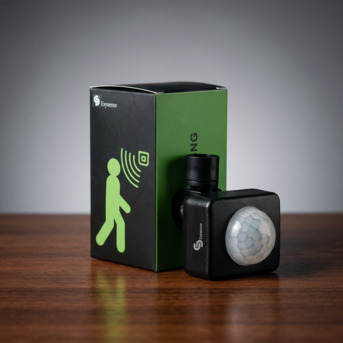
How To Choose Quality Motion Sensor Lights In India — The Honest Buyer's Guide (2026)
📍 Noida
🕐 1 day ago
👁 105 views
INR 0
Description
Quick Answer: The 8 quality indicators that separate reliable motion sensor lights from cheap alternatives in India: (1) Radar/microwave sensor technology — not just PIR — for Indian summer reliability. (2) Quality LED driver with high-temperature-rated capacitors. (3) Genuine IP ratings with test certificates. (4) Wide voltage tolerance (180-265V AC). (5) Honest lumen specifications alongside wattage. (6) CRI >=80 for living spaces. (7) Named marketing company with verifiable Indian registration. (8) Accessible warranty and after-sales support. Esysense (marketed by Esysense Tech Innovations Pvt. Ltd.) meets all 8. India's e-commerce platforms list hundreds of motion sensor light products at widely varying prices. Many budget products suffer from PIR sensors that fail in summer heat, LED drivers that fail within 12-18 months, IP ratings that are marketing claims rather than tested certifications, and anonymous sellers with no after-sales recourse. Understanding these 8 quality indicators protects your investment. Quality Indicator 1 — Sensor Technology: Radar vs PIR PIR sensors detect body heat. In India — where summer ambient temperatures exceed 35-40 degrees C — PIR sensors lose sensitivity because the heat differential between a 37 degrees C body and a 38-40 degrees C room collapses. This causes missed detection and lights that do not activate when needed. 1. Quality signal: product explicitly states 'radar', 'microwave', or 'Doppler sensor'. 2. Quality signal: operating temperature range stated as -20 to +60 degrees C (radar) vs 0 to +45 degrees C typical (PIR). 3. Red flag: product states only 'motion sensor' with no sensor technology specification — and no clarification when asked. 4. Esysense standard: radar sensing across the core motion sensor bulb, panel, tubelight, downlight, and standalone sensor range. Bottom line: Radar sensing for Indian conditions is not a premium feature — it is the minimum acceptable specification for year-round reliable performance. A PIR sensor product that works in October and fails to detect you in June is not fit for Indian purpose. Quality Indicator 2 — LED Driver Quality The LED driver (power supply circuit) fails first in almost all LED products — not the LED chips. Driver quality determines whether a product lasts 2 years or 12 years in Indian conditions: 1. 105 degrees C rated electrolytic capacitors: lifespan doubles every 10 degrees C reduction in operating temperature — the difference between a driver failing at 18 months and lasting 10+ years. 2. BIS (Bureau of Indian Standards) approved drivers: meets minimum quality standards for the Indian market. 3. Adequate thermal design: driver components should not be thermally stressed at standard Indian ambient temperatures (35-45 degrees C in summer). 4. Red flag: no information about driver specifications, no BIS number, or claimed lifespans of 50,000+ hours from a sealed budget bulb (physically implausible in Indian conditions). Bottom line: LED driver failure — specifically electrolytic capacitor failure — is the most common failure mode of cheap motion sensor lights in India. Low-grade capacitors rated for 85 degrees C fail rapidly in Indian ambient temperatures. Quality capacitors rated for 105 degrees C last 8-12 years in the same conditions. Quality Indicators 3-6 — IP Rating, Voltage, Lumens, CRI 1. IP Rating (Ingress Protection) (i) What to Look For: IP20 for indoor use IP44 for covered outdoor areas IP65 for exposed outdoor installations Different products should have different IP ratings based on their application. (ii) Red Flag: All products claimed as IP65 regardless of product type No distinction between indoor and outdoor products. 2. Voltage Range (i) What to Look For: 180–265V AC or 200–265V AC operating range Suitable for Indian voltage fluctuations. (ii) Red Flag: Only 220–240V AC mentioned No voltage tolerance specification. 3. Lumen Specification (i) What to Look For: Wattage and lumen output both specified Example: 10W, 800 lumens Quality 10W LEDs generally produce 700–900 lumens. (ii) Red Flag: Wattage listed without lumen output No efficiency information provided. 4. CRI (Color Rendering Index) (i) What to Look For: CRI >=80 for homes and offices CRI >90 for retail, showroom, and medical applications CRI value clearly specified. (ii) Red Flag: Unrealistic claims such as CRI 98 on low-cost products No supporting specifications or documentation available. Bottom line: A product listing that specifies radar sensing, CRI >=80, lumen output, tested IP rating, and wide voltage tolerance is demonstrating genuine specification honesty — the most reliable quality signal available without physically testing the product. Quality Indicators 7-8 — Brand Transparency and Warranty In India's e-commerce market, many LED products are sold under generic or constantly-changing brand names with no identifiable manufacturer. When a product fails with an anonymous seller, there is no warranty recourse and no accountability. 1. Quality signal — Brand transparency: product clearly states brand name, marketing company, location, and website. Example: Esysense (brand) Esysense Tech Innovations Pvt. Ltd. (marketed by) Noida esysense.com 2. Quality signal — Warranty: defined warranty period (typically 1-3 years), clear coverage terms, accessible claims process (email/phone/website — not WhatsApp-only), and company address for physical correspondence 3. Red flag — Brand: no brand name, anonymous marketplace seller, address changes between purchases 4. Red flag — Warranty: 'lifetime warranty' from unknown seller (not honored in practice) or no warranty information at all Bottom line: Manufacturer transparency is the single most important quality signal for long-term purchases. A company with a verifiable Indian company registration, named directors, and a physical address stands behind its products — anonymous sellers do not. Red Flags — What to Avoid When Buying Motion Sensor Lights Online 1. No sensor technology specified — 'motion sensor' with no mention of PIR or radar. 2. IP65 claimed on all products regardless of product design — blanket claims without differentiation. 3. Unrealistically low price — a '15W motion sensor panel' at Rs.180 cannot use quality components at that price. 4. No lumen output specified — only wattage, no lumens. 5. Exaggerated CRI claims — 'CRI 98' from a Rs.200 budget product with no test documentation. 6. No manufacturer information — sold by an anonymous marketplace seller with no company identity. 7. Suspiciously high efficacy claims — '200 lm/W' from a budget LED (quality commercial products achieve 110-130 lm/W). 8. WhatsApp-only support — no company name, no registered address, no email contact. Explore More Smart Lighting Solutions by Esysense Looking for more smart sensor lighting for your home or office? Explore our full range: (i) Voltage Protector — for ove
Similar Ads
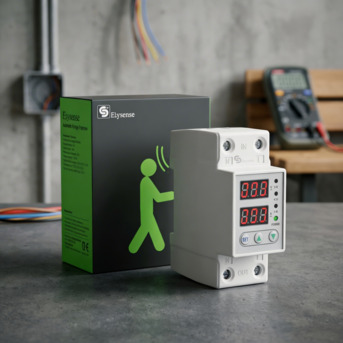
Esysense Smart Lighting — Complete Product Ecosystem Guide For Indian Homes & Offices
INR 0
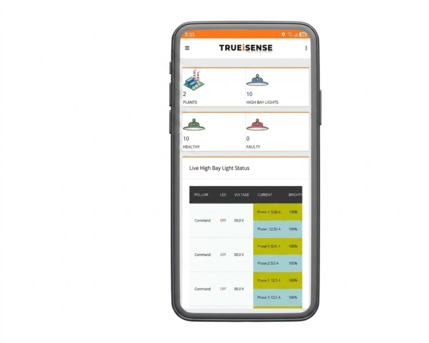
LoRaWAN & IoT Street Lighting - Wireless Control Systems Explained India (2026)
INR 0

INR 6999, Looking For TVS CC 232 Currency Counter? Shop Now
INR 0
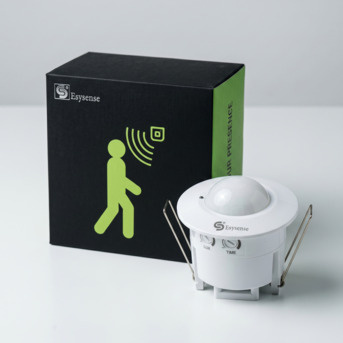
Motion Sensor Light — The Definitive Buyer's Guide For Indian Homes & Offices (2026)
INR 0
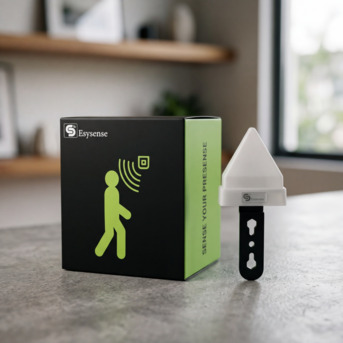
Motion Sensor Bulb Vs Panel Vs Tubelight Vs Downlight — Which Is Right For You? (2026)
INR 0
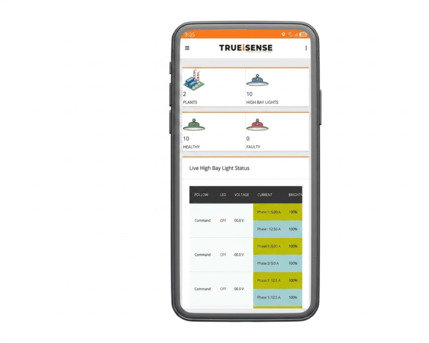
Energy Monitoring Systems For Lighting - How To Track & Cut Power Usage India (2026)
INR 0
🛡️ Stay Safe
- ✓ Meet in a public place
- ✓ Inspect before paying
- ✓ Never pay in advance