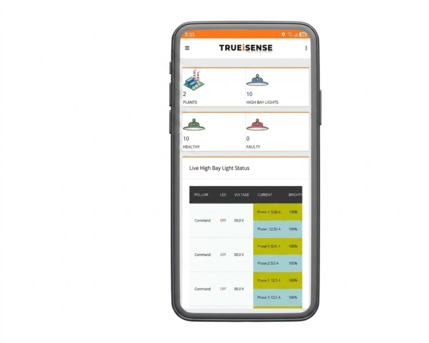
LoRaWAN & IoT Street Lighting - Wireless Control Systems Explained India (2026)
📍 Noida
🕐 1 day ago
👁 105 views
INR 0
Description
Quick Answer: LoRaWAN (Long Range Wide Area Network) is the preferred IoT wireless communication protocol for large-scale municipal smart street lighting — providing long-range (several km per gateway), low-power connectivity that enables entire city street lighting networks to be connected to a CCMS monitoring platform with very few gateway installations. TRUEiSENSE's CCMS Smart Lighting Solutions support all three wireless IoT protocols — LoRaWAN (for large municipal networks), WiFi (for campus deployments), and GSM (for rural and remote locations) — enabling India's municipalities, campuses, and commercial estates to deploy smart street lighting regardless of existing communication infrastructure. Up to 70% energy savings achievable. LoRaWAN vs WiFi vs GSM - Protocol Comparison for Street Lighting India 1. LoRaWAN (i) Range per Gateway/AP: Several kilometers in urban areas and even greater coverage in rural areas (ii) Power Consumption: Very low; ideal for solar-powered nodes (iii) Deployment Cost: Low; a small number of gateways can cover large areas (iv) Data Rate: Low, but sufficient for street-light telemetry and control (v) Best For: Large municipal networks and city-wide deployments (vi) Two-Way Control: Yes (vii) TRUEiSENSE CCMS Support: Yes 2. WiFi (i) Range per Gateway/AP: Approximately 100–300 meters outdoors (ii) Power Consumption: Moderate (iii) Deployment Cost: Moderate, especially cost-effective when existing WiFi infrastructure is available (iv) Data Rate: High (v) Best For: Campuses, industrial facilities, and commercial estates with existing WiFi networks (vi) Two-Way Control: Yes (vii) TRUEiSENSE CCMS Support: Yes 3. GSM (i) Range per Gateway/AP: Nationwide cellular coverage (ii) Power Consumption: Moderate (iii) Deployment Cost: Per-node SIM and data costs (iv) Data Rate: Medium (v) Best For: Rural roads, remote locations, and areas without local network infrastructure (vi) Two-Way Control: Yes (vii) TRUEiSENSE CCMS Support: Yes CCMS Smart Lighting: trueisense.in/pages/ccms-monitoring-sensor-street-lighting-solutions Free Assessment: trueisense.in/pages/free-energy-savings-assessment As of 2026, wireless IoT communication is the enabling infrastructure for smart street lighting at scale in India. Connecting thousands of individual streetlight nodes to a centralized CCMS monitoring platform requires reliable, low-power, and cost-effective communication — and LoRaWAN, WiFi, and GSM each deliver this across different deployment scenarios. TRUEiSENSE's multi-protocol CCMS platform supports all three, making smart street lighting deployment practical across the full range of Indian environments. What Is a Wireless Lighting Control System? A wireless lighting control system enables smart luminaire nodes to communicate operational data and receive control commands without physical communication cabling — using radio frequency protocols such as LoRaWAN, WiFi, or GSM to connect each node to a centralized monitoring and control platform. The elimination of communication cabling is the defining advantage of wireless over wired systems for outdoor street lighting. (i) No physical communication cabling required between nodes and the control center (ii) Dramatically reduced deployment cost vs wired alternatives (iii) Faster installation — no civil engineering work for communication infrastructure (iv) Simpler ongoing maintenance — communication issues addressed remotely (v) Flexible topology — nodes can be added, reconfigured without physical changes (vi) TRUEiSENSE CCMS supports LoRaWAN, WiFi, and GSM wireless protocols Bottom Line: Wireless IoT communication eliminates the cabling infrastructure that makes wired street lighting control prohibitively expensive at scale — enabling cost-effective, fast-deploying smart street lighting across Indian municipal and campus environments. How Does LoRaWAN Work in Smart Street Lighting? LoRaWAN achieves its long range through spread spectrum modulation and very low data rate communication. Each streetlight node's IoT module transmits a small data packet — containing operational status, energy consumption, dimming level, and fault flags — using very little power. This packet is received by LoRaWAN gateways within range, which forward the data to the CCMS server via standard internet connectivity. The long range of LoRaWAN is its defining advantage: a single gateway can cover a radius of several kilometers in a typical urban environment, meaning a relatively small number of gateways provides CCMS communication for an entire city's street lighting network. LoRaWAN also supports two-way communication — enabling remote dimming commands to travel from the CCMS dashboard through the server and gateway back to individual streetlight nodes. Step 1: Node Transmits (i) Direction: Node → Gateway (ii) What Happens: The IoT module sends data packets containing status information, energy consumption, dimming levels, and fault alerts. Step 2: Gateway Relays (i) Direction: Gateway → CCMS Server (ii) What Happens: The gateway forwards received data to the CCMS server using an internet connection such as Ethernet or GSM backhaul. Step 3: Dashboard Updates (i) Direction: Server → Dashboard (ii) What Happens: The server processes and aggregates data, then updates the web dashboard in near real time. Step 4: Control Command (i) Direction: Dashboard → Server → Gateway → Node (ii) What Happens: Remote dimming commands, scheduling updates, or configuration changes are transmitted back to the luminaire. Bottom Line: LoRaWAN's combination of long range, low power, and low infrastructure cost makes it the most cost-effective wireless protocol for large-scale Indian municipal street lighting — a single gateway covering several km enables city-wide CCMS connectivity with minimal infrastructure investment. When to Use WiFi vs GSM for Street Lighting Control While LoRaWAN is the recommended protocol for large municipal deployments, WiFi and GSM are the appropriate choices in specific scenarios: WiFi for campus environments where existing wireless infrastructure can be leveraged, and GSM for rural stretches and remote locations where LoRaWAN gateway infrastructure is not yet available. 1. City-Wide Municipal Network (500+ Nodes) (i) Recommended Protocol: LoRaWAN (ii) Reason: Lowest cost per node, minimal gateway requirements, and the widest coverage area. 2. Industrial Campus with Existing WiFi (i) Recommended Protocol: WiFi (ii) Reason: Leverages existing infrastructure and avoids additional gateway investments. 3. Educational or Commercial Campus (i) Recommended Protocol: WiFi or LoRaWAN (ii) Reason: Selection depends on the extent and reliability of existing WiFi coverage. 4. Rural Road Network (i) Recommended Protocol: GSM (ii) Reason: Nationwide cellular coverage eliminates the need for additional communication infrastructure. 5. Mixed Urban and Rural Network (i) Recommended Protocol: LoRaWAN + GSM (ii) Reason: A si
Similar Ads
Esysense Smart Lighting — Complete Product Ecosystem Guide For Indian Homes & Offices
INR 0

INR 6999, Looking For TVS CC 232 Currency Counter? Shop Now
INR 0
Motion Sensor Light — The Definitive Buyer's Guide For Indian Homes & Offices (2026)
INR 0
Motion Sensor Bulb Vs Panel Vs Tubelight Vs Downlight — Which Is Right For You? (2026)
INR 0
Energy Monitoring Systems For Lighting - How To Track & Cut Power Usage India (2026)
INR 0

Sustainable Lighting Solutions - How To Build Energy-Efficient Spaces India (2026)
INR 0
🛡️ Stay Safe
- ✓ Meet in a public place
- ✓ Inspect before paying
- ✓ Never pay in advance